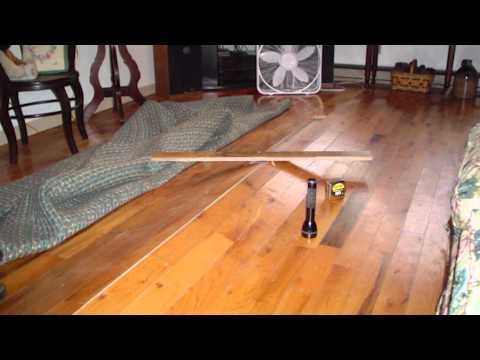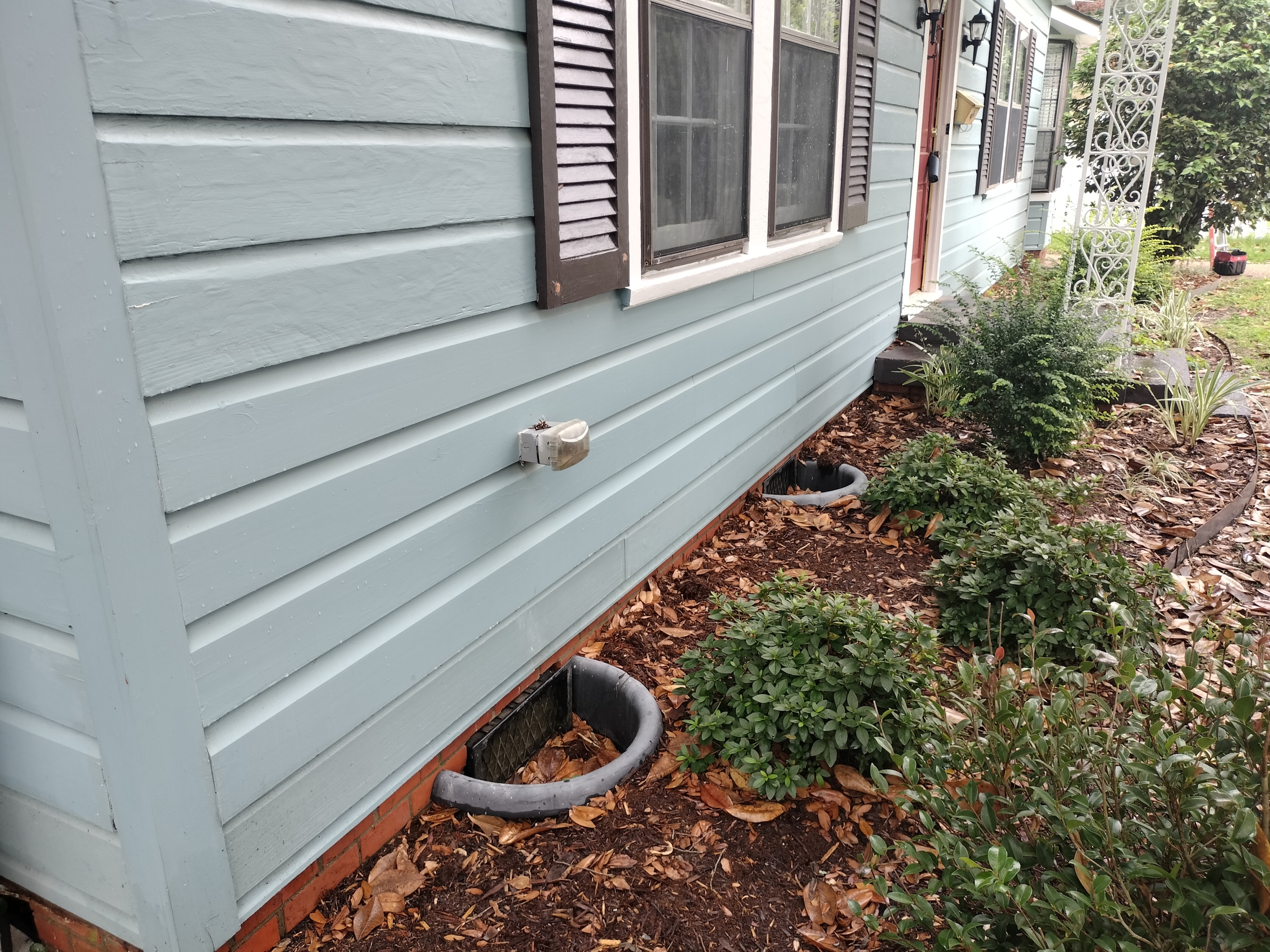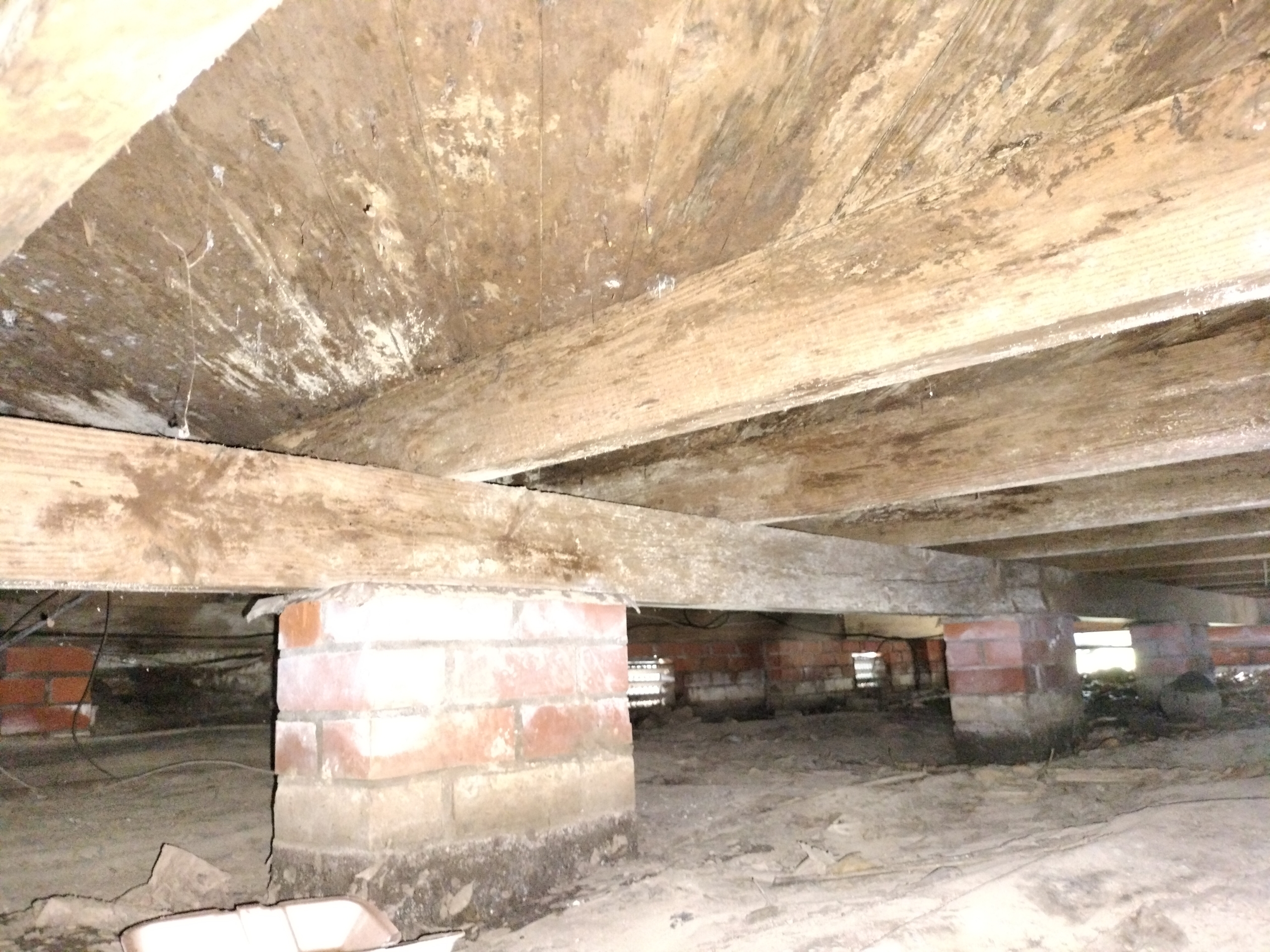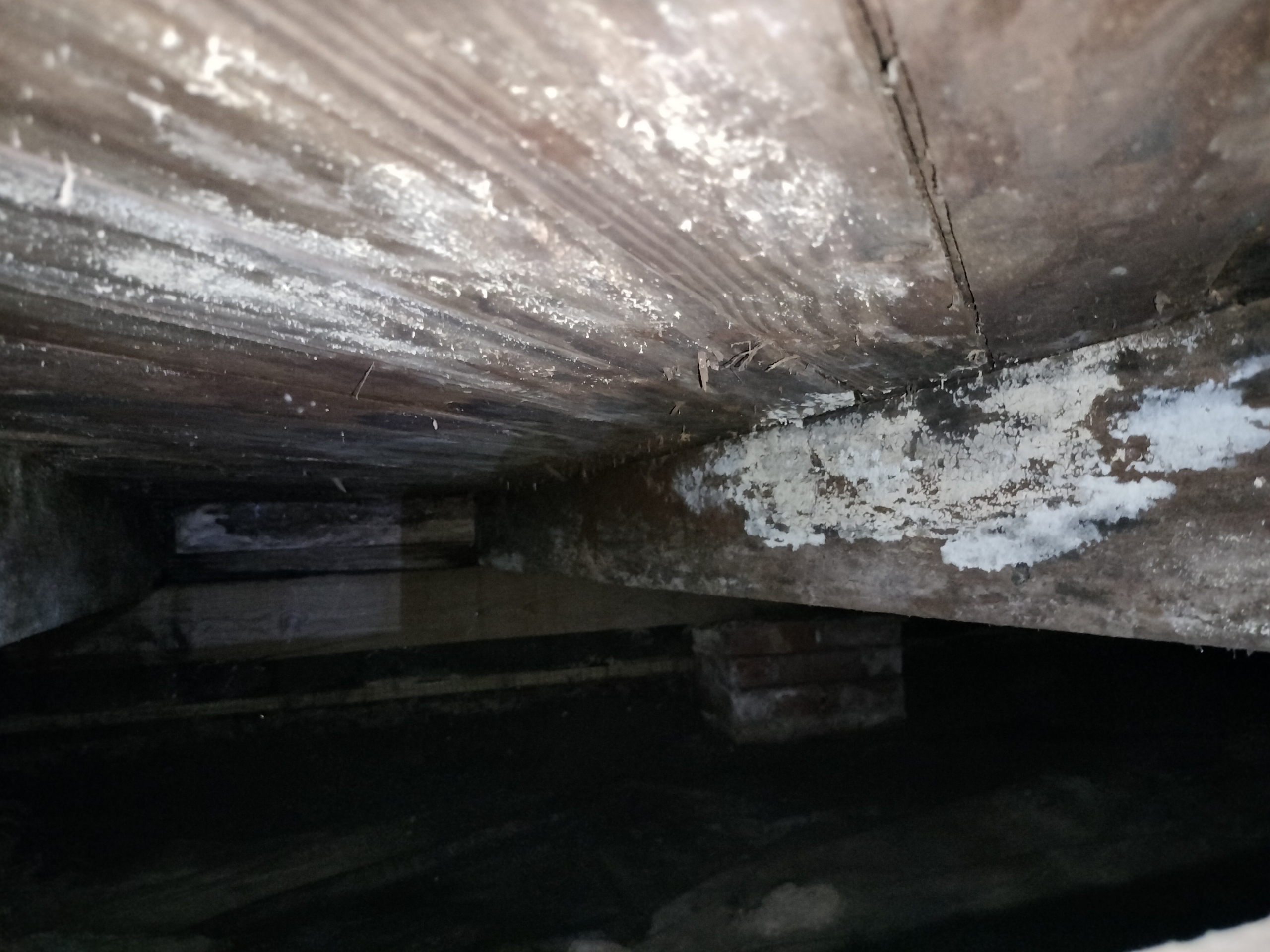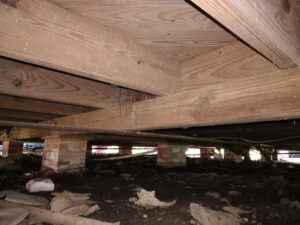
High moisture levels under the house?

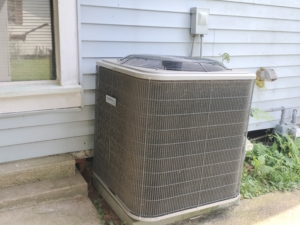
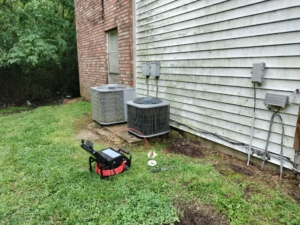
Oversized A/C on a Small House
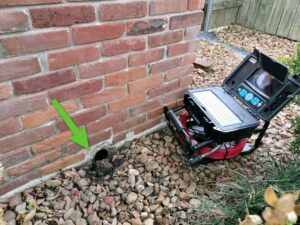
A sewer scope is a type of inspection that involves inserting a small camera on a flexible cable into a sewer line or drainpipe to visually inspect the condition of the pipe and identify any blockages, damage, or other issues. The camera captures real-time video footage of the interior of the pipe, which can be viewed by a technician or plumber on a monitor. Sewer scopes are commonly used to diagnose sewer line problems such as clogs, cracks, tree root infiltration, corrosion, and other issues that can cause backups and sewage leaks. This type of inspection is often recommended for home buyers, as well as for homeowners who are experiencing recurring sewer line problems.
In the past, you would have had to hire a licensed plumber with expensive equipment. Today, more home inspectors are trained and equipped to perform sewer scope inspections. It is not a standard part of a typical home inspection. Home inspectors generally focus on evaluating the overall condition of the home, including the structural elements, roof, electrical, plumbing, and HVAC systems, among other things. A sewer scope is a more specialized inspection of the waste plumbing system.

Inspecting Cast Iron Pipes

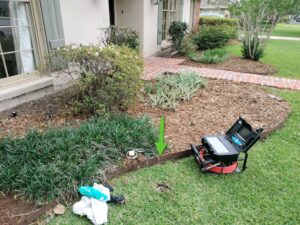
Performing Sewer Scope in Front Yard

Sewer Scope on Multi-Family Units

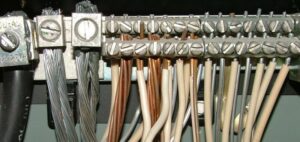
Aluminum & Copper Wiring
Copper has been used in electrical wiring since the early 1800’s. It is an excellent conductor of electricity and has unique properties that make it the ideal choice for electrical wiring. When the price of copper became too expensive in the 1960’s and 70’s, aluminum wiring was introduced as a less expensive alternative.
Aluminum wiring can be safe if installed properly. Some forms is still being installed in new construction. Despite this, there are problems that weren’t known in the beginning. Aluminum wiring will rust, which then acts as an insulator. The wiring is also softer than copper. This makes it easier to damage when worked with. A study conducted for the US Consumer Product Safety Commission (CPSC) showed that homes built before 1972 with aluminum wiring, are 55 times more likely to have one or more wire connections at outlets reach “Fire Hazard Conditions” than homes wired with copper.

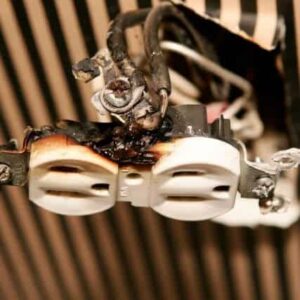
Aluminum Wire & Electrical Outlet
The survey included only aluminum wire connections at electrical outlets. The “Fire Hazard Conditions” are mainly found at these connections. Aluminum wiring is softer than copper and the smallest cut in a wire can cause resistance. Electrical resistance then causes heat to build up. It is then possible for the overheating wires to cause a fire.
When electricity passes through any wire, it is normal for the wire to heat up and even expand slightly. Aluminum wiring also expands considerably more than copper when heated. Eventually the wire can become loose at the connection from years of expanding and contracting. This is called creeping. Once the wire has become loose at the connection, electricity may arc or spark between the gap. The arcing creates overheating, which may cause a house fire.
Despite the hazards of having aluminum wiring, it is usually impractical to rewire the entire home. While it may be preferable to replace all the aluminum wiring with copper, the benefits will usually outweigh the cost. CPSC has approved two other methods of repairs. Special connectors can be installed between the aluminum wire and the receptacle itself. Once either COPALUM or AlumiConn connectors are installed by a licensed electrician, the aluminum wiring will no longer be considered a fire hazard.
Additional Resources

Powderpost Beetle Damage in Crawlspace
Powderpost beetles are a type of wood destroying insect that can found all over the world. They wreck havoc on a homes structure and are second only to termites in the amount of destruction they create. They can go unnoticed for many years, despite being active. Their presence often comes as a surprise for many homeowners.
Some types of powderpost beetles prefer only hardwoods, such as cabinets, furniture and flooring. In the Acadiana area, Anobiid powderpost beetles are most common. They attack both hardwoods and softwoods. In the crawl space under a pier home, is where most beetles can be found. Sub-flooring, wood beams and floor joists are most susceptible to them.
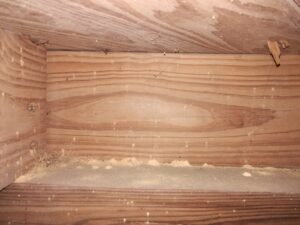
Powderpost beetles need damp wood with a moisture content of at least 14% to survive. Damp crawl spaces, like we have in South Louisiana, provide an ideal environment for the beetles to breed and multiply. Powderpost beetle damage closely resembles “shot” damage from a shotgun. The holes are usually smaller than the hole left behind from a BB. This is normally between 1/16 to 1/8 of an inch in diameter. There may just be a few holes in one area or many throughout the entire structure. If the powderpost beetles infestation is active, you may also see powder coming out the holes or sitting below the holes.

Active Powderpost Beetle Infestation
Finding powderpost beetle damage on an older pier home is very common in South Louisiana. In many cases the home has been treated in the past and there is no longer an active infestation. There may be no need to worry about repairs if treated early. Having the home treated as soon as possible by a licensed pest management professional is crucial. If ignored, floors may develop soft spots or even bigger structural issues.
The type of treatment required to rid your home of powderpost beetles varies depending on the location of the infestation, the size of the infestation and the exact type of powderpost beetle found. While chemically spot treating certain areas of your home may prove successful in some cases, putting a tent around the entire home and fumigating may be the only viable option. Fumigating an entire home can also be very costly, but if ignored a powderpost beetle infestation can cause significant structural damage to your home.

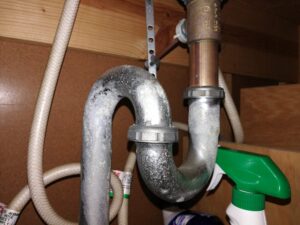
Improper “S” Trap at Kitchen Sink
During a home inspection it is common to find sink drains with an improperly installed trap. Noxious sewage gasses may come up from the pipes if there is an improper trap on a sink drain. The flow of sewage gasses are normally blocked by the water sitting in the trap.
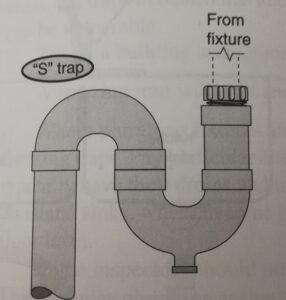
When a trap is correctly installed on a drain, it resembles the shape of a ‘P’. These are called ‘P’ traps. Sometimes for various reasons, plumbers will install traps with questionable performance. The most common culprit is the famous ‘S’ trap. These are often found when a home is on piers. Even though ‘S’ traps are very common, they are still considered to be a deficiency.
The problem is the design of the ‘S’ traps. When water is flowing down the drain and into a ‘S’ trap, the flow can siphon water out of the trap. With little to no water in the waste trap, sewage gasses are able to creep back up to the home. ‘P’ traps do not have this problem.

“S” Trap Diagram
Turning your improper ‘S’ traps into proper ‘P’ traps can be a costly repair and sometimes it is just not feasible. In many cases ‘S’ traps do not cause any major problems for the home occupants. Flushing a large amount of water down the drain at once is more likely cause it to siphon out the trap. If you run a little more water down the sink drain, the trap should stay full and block the gasses like normal.

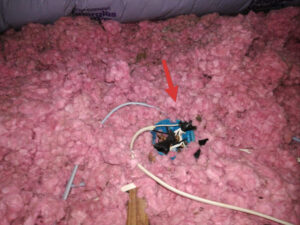
Open Junction Box in Attic
It is considered a fire hazard to have open junction boxes. Putting a cover on them can usually be done very easily. A junction box is usually a plastic or metal box that contains the electrical wire connections. The wire connections should be completely enclosed inside these boxes. If you can see the wire nuts or electrical tape, then it’s a problem. The junction box cover may have been removed or was never installed to begin with. A 50-cent cover from Home Depot is all that is usually needed.
Sometimes the boxes are crowded with wires that stick outside the box. Putting a cover onto a crowded box may not be so easy. In these cases, doing it yourself may not be an option. An experienced electrician may have to install a larger box or stack another box on top, in order to enclose all the wire connections in the junction box with a cover.

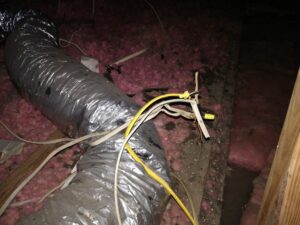
Missing Junction Box in Attic
Electrical connections made improperly can be vulnerable to sparking and creating a fire. If the connected wires become loose, arcing/sparks between the wires becomes likely. If the connection is inside a junction box, the risk of a house fire is substantially low. Electrical connections outside of junction boxes that become loose and arc, can create a house fire. Most connections are in the homes attic, where insulation and other building materials can become flammable.
Finding open junction boxes and electrical connections that are not inside junction boxes, are one of the most common problems a home inspector will find. In many cases the open junction boxes have been without covers for many decades and multiple home owners without incident. They may have been left open by a do it yourself home owner or left without covers by an electrician from many years ago, before electrical codes and city inspectors became more stringent. In any case, protecting the electrical connections at your home inside a junction box with a cover, is the best bet to prevent a home fire.
House Call Acadiana is a local franchise based out of Lafayette Parish, Louisiana. Lafayette is called the ‘Hub City’, being centrally located in Acadiana, or ‘Cajun Country’ as it’s famously known worldwide. The area has a growing real estate market with an especially high amount of new construction. House Call Acadiana home inspectors have been servicing the Acadiana area since 2009.
We love hearing from you anytime!
Call, text or email us if you have any questions or use the online scheduler to set up a home inspection.
201 N College Rd, Lafayette, LA 70506